Spinning vs. Casting Rods: The Ultimate Beginner’s Guide (2026 Update)
Choosing your first fishing rod doesn’t have to be overwhelming.
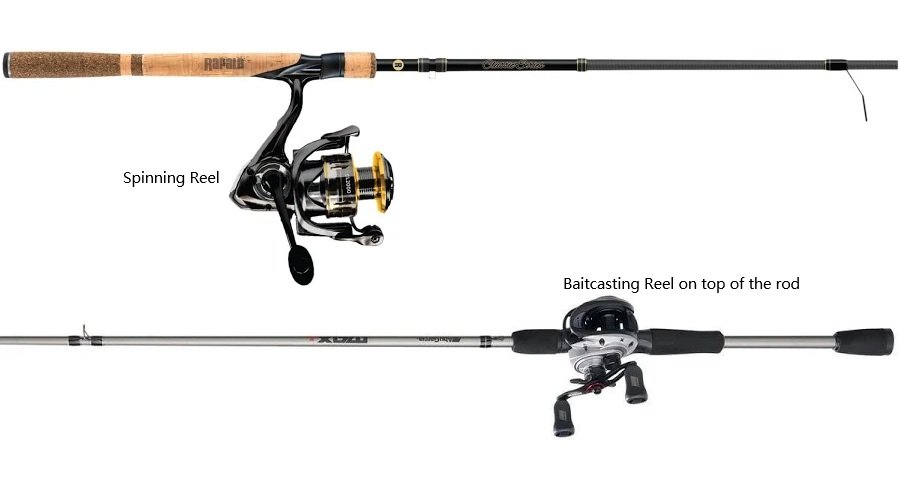
At its core, a rod is a lever that extends your arm to cast lures, set hooks, and fight fish. The biggest difference comes from the reel type it pairs with: spinning (reel hangs underneath) or casting (reel mounts on top, with spin-cast “push-button” or baitcasting variants).
We review to breaks down the key differences, pros/cons, best uses, and beginner recommendations—updated for 2026 trends where durable, affordable options like composites remain favorites for new anglers.
1. Spinning Rods: The Beginner-Friendly All-Rounder
Spinning setups dominate for good reason—they’re versatile, forgiving, and easy to learn.
- Design & How It Works — Reel sits below a straight handle; line comes off a fixed spool during casts with minimal resistance. This allows smooth, long casts even with light lures.
- Best For
- Light lures (1/16–1/4 oz) and finesse techniques.
- Clear water, spooky fish, light lines (4–10 lb).
- Species like panfish, trout, walleye, small bass, or inshore saltwater.
- Pros — Easy to cast (no backlash risk), great for wind/light baits, beginner-friendly.
- Cons — Less accurate for pinpoint casts; limited power with heavy lures/line.
Spinning remains the top recommendation for most beginners in 2026—quick to master and versatile across freshwater scenarios.
2. Casting Rods: Power, Precision, and Two Styles
Casting rods position the reel on top for better control and leverage.
- Spin-Cast (Push-Button) — Enclosed spool with a button release.
- Easiest for absolute beginners/kids—no tangles, simple operation.
- Best starter for casual fishing or teaching.
- Baitcasting (Levelwind) — Revolving spool pulled by lure weight.
- Pros: Superior accuracy, power, and control for heavy lures/line.
- Cons: Steep learning curve—backlash (“bird’s nest”) tangles common without practice/thumb control.
- Best for larger bass, pike, heavy cover, or 1/2 oz+ lures.
Casting excels for experienced anglers needing precision, but spin-cast is the gentle intro for newbies.
Key Specs to Compare (All Rod Types)
- Length — 5’6″–7’6″ common. 6’–7′ is ideal for beginners (balances distance/accuracy). Longer = more leverage/casting range; shorter = easier handling.
- Action — Where the rod bends: Fast (tip bends) for quick hooksets; Medium (versatile bend) best for beginners; Slow (full bend) for shock absorption.
- Power — Light (small fish/light lures) to Heavy (big fish/heavy lures). Medium or Medium-Light suits most starters.
- Material
- Graphite: Light, sensitive—great feel but more brittle.
- Fiberglass: Tough, durable—forgiving for mishandling.
- Composites (e.g., Ugly Stik): Blend of both—top beginner choice for strength + some sensitivity.
Core Comparison Table: Spinning vs. Casting Rods
| Feature | Spinning Rod | Casting Rod (Baitcast) | Spin-Cast (Push-Button) |
|---|---|---|---|
| Reel Placement | Underneath (straight handle) | On top | On top |
| Line Release | Fixed spool, low resistance | Revolving spool | Enclosed spool, button release |
| Learning Curve | Easy—minimal tangles | Moderate to hard (backlash risk) | Easiest—no backlash |
| Best Lures/Weights | Light (1/16–1/4 oz) | Heavy (1/2 oz+) | Medium-light |
| Advantages | Versatile, wind-friendly, finesse | Accuracy, power, heavy setups | Tangle-proof, kid/beginner ideal |
| Challenges | Less pinpoint control | Practice needed | Limited distance/power |
| Best For Beginners? | Yes—most start here | After spinning mastery | Yes—for absolute starters/kids |
Beginner “Master Plan” Recommendations (2026)
Start simple—experts still recommend a two-outfit approach for broad coverage:
- Primary Setup (General/All-Around)
- 6’–7′ Medium Power, Medium Action spin-cast or spinning combo.
- Pair with 8–12 lb mono/fluoro.
- Top pick: Ugly Stik GX2 combo (composite durability, budget-friendly, unbreakable for rough use—still a 2026 legend for beginners).
- Secondary Setup (Finesse/Light)
- 6’–6’6″ Light or Medium-Light spinning rod/reel.
- 6–10 lb line for panfish, trout, or finesse bass.
- Solid affordable option: Shimano FX series (lightweight graphite feel, smooth casting—great value entry-level in recent reviews).
Other strong 2026 beginner contenders: Falcon BuCoo SR (versatile spinning), Lew’s or Daiwa budget combos (value performance).
Quick Casting Tip for Beginners
Visualize a clock: Start rod tip at 2 o’clock, swing back to 12 o’clock smoothly, then forward to release at 2 o’clock. For spinning, feather the spool edge with your finger to control speed and land softly.
Final Verdict
- Start with spinning (or spin-cast for kids)—it’s forgiving and covers 80% of beginner needs.
- Graduate to baitcasting later for precision/power.
- Prioritize durability (composites like Ugly Stik) over fancy features when starting.
Which setup are you leaning toward—spinning for ease or spin-cast for simplicity? Check our beginner combo guides for more 2026 picks!
How to select your first fishing rod? read ->
How to setup your first gear? read ->
Next Steps for You:
- 📚 [Fishing Tips] — Fishing Tips for beginners.
- 📚 [Master the Basics] — Step-by-step for beginners.
- 🎣 [Choose Best Gear] — Expert reviews & top picks.
- 🐟 [Catch More Bass] — Pro tactics and spots.