Meet Your Opponents – Bass Biology, Behavior, and Sensory Systems for Beginners
Bass fishing is as much about understanding your opponent as it is about gear and technique. Largemouth and smallmouth bass dominate North American waters, each with unique biology, habits, and super-senses that make them challenging yet rewarding targets for beginners in 2026.
This chapter builds on our beginner foundation. For a complete start (gear, rigs, knots, ethics, and Quebec tips), see our Complete 2026 Bass Fishing Guide.
Largemouth Bass: The Adaptable Ambush Predator
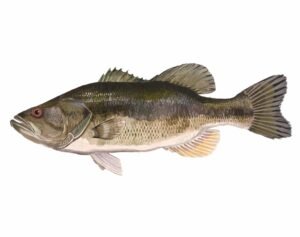
Scientific Name: Micropterus salmoides
Nicknames: Bucketmouth, lunker, green trout
Why Beginners Love Them: Widespread, aggressive, and forgiving of minor mistakes.
Biology & Appearance
Largemouth are the largest black bass species, olive-green with a dark, jagged horizontal stripe along each side. Their defining feature: the upper jaw extends past the rear edge of the eye when closed. They can live 16+ years, averaging 1–3 lbs but reaching trophy sizes (world record 22 lb 5 oz). Warmer southern waters produce bigger fish due to longer growing seasons.
Ambush Hunter
Largemouth are classic ambush predators. They hide in heavy cover—lily pads, weed beds, logs, docks—and explode when prey wanders close. Their massive mouth creates a vacuum-like suction to inhale food. The lateral line detects vibrations, allowing strikes in muddy water.
Diet & Energy Management
Bass are “underwater accountants,” weighing energy cost vs. reward. They eat baitfish (shad, minnows), crawfish, insects, frogs, snakes, mice, ducklings, even baby turtles—anything swallowable.
Habitat & Seasonal Behavior
Highly adaptable—from clear lakes to weed-choked ditches.
- Comfort zone: 65–85°F (most active).
- Spring: Move shallow (40–45°F) for pre-spawn.
- Summer: Seek deep water or shade during bright sun.
- Fall: Feed heavily in shallows to bulk up for winter.
Intelligence
Bass learn quickly—avoiding lures after bad experiences. In pressured waters, they develop “PhD-level” caution, requiring stealth and variety.
Smallmouth Bass: The Bronzeback Fighter
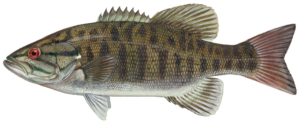
Scientific Name: Micropterus dolomieu
Nicknames: Bronzeback, brown bass, smallie
Why Beginners Love Them: Incredible fight, acrobatic jumps.
Biology & Appearance
Brown to olive with vertical bars for rocky camouflage. Jaw stops at eye rear; dorsal fin is continuous (no dip like largemouth). Smaller average size than largemouth but pound-for-pound stronger fighters.
Preferred Environment
Clearer, cooler, moving water with rocky/sandy bottoms and high oxygen. Ideal range: 65–75°F. Masters of current—use boulders and ledges as breaks.
Diet
Crayfish king, but large adults shift to baitfish (shad, gobies, shiners). Opportunistic: insects, tadpoles, frogs.
Fighting Spirit
Bone-jarring strikes, relentless runs, and jumps—often feels bigger than scale weight in current. Lighter tackle (4–8 lb) maximizes sport.
Spotted & Temperate Bass: The Subtle Cousins
Spotted Bass (Micropterus punctulatus)
Intermediate between largemouth and smallmouth. Spots below jagged lateral band; rough tongue patch. Schools more, chases bait in open water. Prefers moderate current and structure.
Temperate Bass (Morone genus)
Not true black bass (sunfish family). Includes white bass (silvery, striped, frenzied feeders), striped bass (saltwater origin, massive, open-water), and hybrids (wipers). Flatter body, continuous stripes.
Quick ID Tips
- Shape: Black bass football-shaped; temperate flatter/silver.
- Stripes: Temperate continuous/broken; spotted jagged with spots.
- Behavior: Temperate school in open water “jumps”; black bass structure-oriented.
Sensory Biology: How Bass Hunt
Bass combine sight, hearing, and lateral line for deadly efficiency.
- Sight
Strong vision, tuned to contrast/movement over detail. Snell’s Window (97.2° upward view) makes silhouettes key. Light-sensitive—hide in shade/deep during bright sun. - Hearing
Detect vibrations far away via inner ear and swim bladder. Rattles irritate/stimulate strikes in low visibility. - Lateral Line
“Vibration sensor” along flanks—detects water displacement. Hunts in dark/muddy water or heavy cover.
The Underwater Accountant
All senses feed into energy calculation: strike only if reward justifies cost.
Essential Toolkit Basics
Match gear to opponent.
- Balanced Tackle
Rod, reel, line must harmonize. Beginner largemouth: 6–7 ft medium-action spinning rod + 10 lb mono. Smallmouth: light-action 6 ft rod + 6–8 lb line. - Terminal Tackle
Hooks #2–4/0; Texas rig for weedless plastics. - Accessories
Needle-nose pliers, polarized sunglasses (spot structure), sunscreen, tackle box.
Master these opponents and tools, and you’ll turn luck into skill.
Next Steps
Ready for your first cast? Check our Ugly Stik GX2 Review 2026 or Best Spinning Combos Under $100 2026.
If you are interested in bass fishing, please visit our Bass Fishing Beginner Hub.