Flipping vs Pitching: Which Bass Technique Wins More Bites in 2026?
f you’ve spent any time around bass anglers, you’ve heard the terms “flipping” and “pitching” thrown around like they’re the same thing. They’re not—and getting the difference right can turn a slow day into a solid limit.
Both are short-range, precise ways to drop a bait right where big bass are hiding in heavy cover, but the mechanics, distances, and best scenarios are different. This guide breaks it down simply: what each is, how they differ, when to pick one over the other, the gear that actually works in 2026, and which to learn first as a beginner.
What Flipping Really Is
Flipping is an old-school, ultra-precise technique for placing your bait dead quiet into the thickest stuff—think matted grass, laydowns, or flooded timber where bass feel safe.
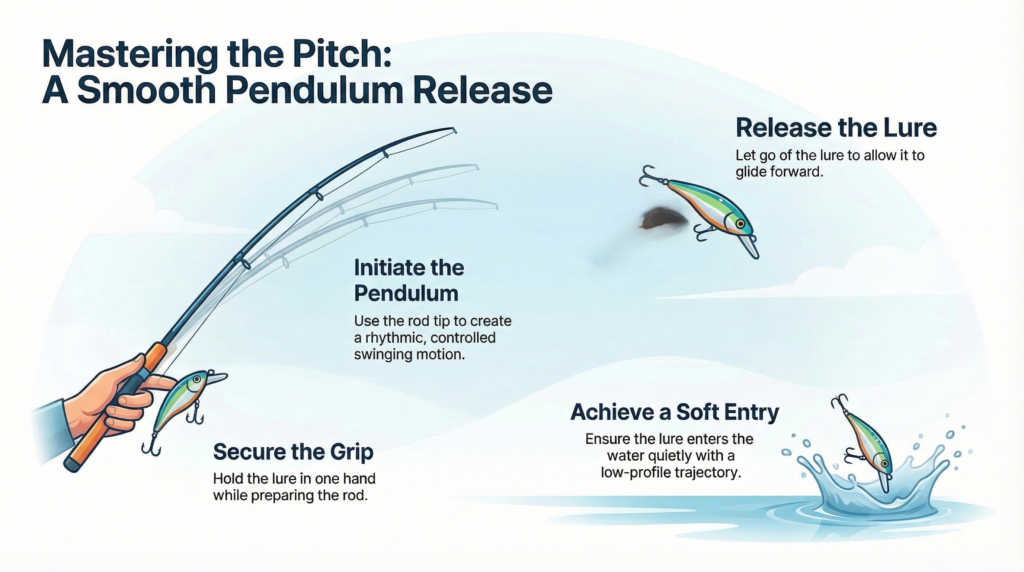
You peel off line (usually rod-length or more), lock the reel, and use a pendulum swing to “flip” the bait in without ever disengaging the spool for most presentations. No big cast, no noise—just controlled drops.
Why it works
- Distance: 5–20 feet max
- Stealth: Almost silent entry
- Precision: Pinpoint targets in impenetrable cover
It’s perfect when bass are buried deep and spook easily. Many pros say true flipping (fixed line, no reeling between drops) is less common now—most “flipping” today is actually pitching—but it still shines in extreme thick mats or when you’re working multiple close targets fast.
What Pitching Really Is
Pitching is the more common, versatile cousin. You use a soft underhand motion to send the bait on a low, smooth arc to targets 15–50 feet away.
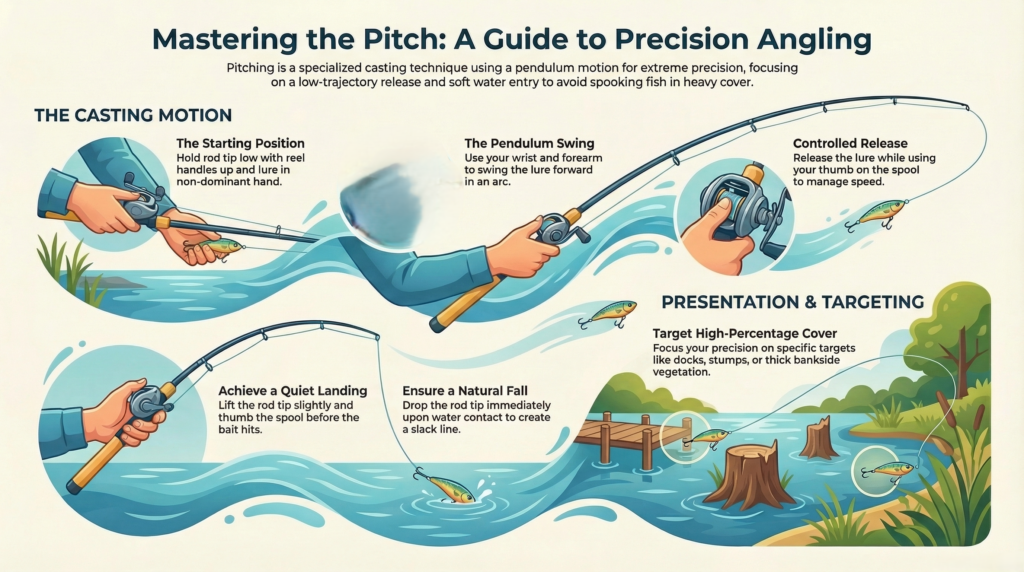
You disengage the spool, thumb it for control, and release with wrist/pendulum action for a quiet splash.
Why it works
- Distance: 15–50 feet
- Versatility: Covers edges, docks, scattered cover
- Quiet but efficient: Low trajectory avoids spooking fish
Pitching lets you probe more water while keeping presentations natural—ideal for docks, weed edges, or boat-side targets.
Watch video on youtube: How To Flip and Pitch Cast – John Crews
Flipping vs Pitching: Key Differences at a Glance
| Feature | Flipping | Pitching |
|---|---|---|
| Distance | Very short (5–25 ft) | Medium-short (15–50 ft) |
| Line Management | Fixed line, minimal reeling | Spool disengaged, thumb control |
| Cast Motion | Pendulum swing, no true cast | Underhand pitch/cast |
| Noise Level | Near-silent | Quiet but audible |
| Best Cover | Thick mats, deep timber | Edges, docks, lighter vegetation |
| Speed/Efficiency | High for close targets | Better for covering area |
Quick takeaway: Flipping = surgical precision in the jungle. Pitching = controlled reach with flexibility.
When to Choose Flipping vs Pitching
Flip when
- Bass are deep in matted hydrilla, milfoil, or pads
- You’re boat-fishing close-range targets repeatedly
- Stealth is everything (post-frontal, clear water)
Pitch when
- Targeting structure edges, laydowns, boat docks
- Bank fishing or need to fan-cast a zone
- Want to mix stationary (jigs) and moving baits
Pro move: Many anglers hybrid—pitch to locate, then flip high-percentage spots. It’s how guys like Brandon Palaniuk and Kevin VanDam maximize efficiency.
Best Gear for Flipping & Pitching in 2026
These techniques demand backbone to punch through cover and pull fish out.
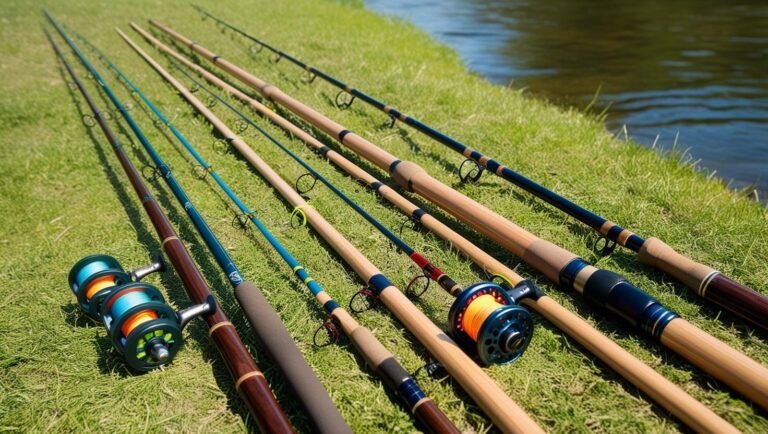
Rod
- Length: 7’–7’6″
- Power: Heavy or Extra Heavy
- Action: Fast (quick hooksets)
- Beginner pick: Ugly Stik GX2 Heavy (durable composite, affordable, handles abuse—great starter without breaking the bank). Upgrade to specialized like Fenwick World Class or Dobyns Champion for more feel.
Reel
- Baitcaster (essential for control)
- Gear ratio: 7.1:1–8.1:1 (fast retrieve/hooksets)
- Hot 2026 option: Daiwa Tatula Elite Pitch/Flip (designed specifically for these techniques—smooth, backlash-resistant). Budget: Shimano Curado or Lew’s.
Line
- Braid: 50–65 lb (abrasion-proof for grass/wood)
- Leader: 15–25 lb fluoro (invisible, shock absorption)
Lures
- Jigs (football, flipping jigs with trailers)
- Texas-rigged creatures/craws
- Punch rigs for thick mats
Affiliate tip: Grab a solid flipping/pitching combo under $150 on Amazon—search “heavy baitcasting rod combo bass” for options like Ugly Stik + budget reel setups that last years.
Look for a heavy baitcasting combo under $150—durable, affordable, and perfect for learning flipping & pitching.
👉 Check current deals on Amazon
Common Beginner Mistakes to Skip
- Splashing loudly → Spooks fish; practice soft entries.
- Light rod/power → Can’t extract fish from cover; go heavy.
- Backlash city → Set brakes properly, thumb spool.
- Rushing presentations → Let bait sink, work slow.
Final Verdict: Which to Learn First?
Start with pitching.
It’s easier mechanically (underhand cast feels natural), more forgiving for beginners, and works in way more situations. Once you nail pitching accuracy and quiet entries, flipping’s fixed-line pendulum becomes a logical next step for those “impossible” spots.
In 2026, with better rods/reels reducing backlash, both are more accessible than ever. Master pitching first—you’ll catch fish sooner, build confidence, then add flipping to level up.
Master pitching first—then add flipping for maximum results.
👉 Explore the best beginner gear
👉 Want better accuracy? Check out the Best Gear for Flipping & Pitching in 2026 full review!
Next Steps for You:
- 📚 [Fishing Tips] — Fishing Tips for beginners.
- 📚 [Master the Basics] — Step-by-step for beginners.
- 🎣 [Choose Best Gear] — Expert reviews & top picks.
- 🐟 [Catch More Bass] — Pro tactics and spots.