Types of Hooks and How to Select Fishing Hook
To select the right fishing hook, you must match the hook to your target fish species, the type of bait you are using, and your specific fishing style or technique. Selecting an improper hook can result in fish taking off before you set the hook or shaking free before you can land them.
1. Understand Hook Sizing Systems
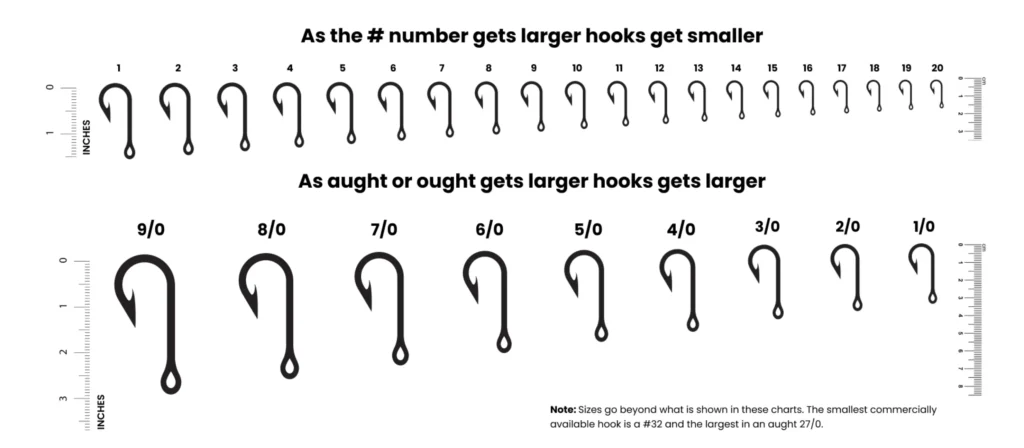
Fishing hooks use two different naming conventions that can be confusing because they have an inverse relationship:
- Number Sizes (#): Used for small to medium hooks. As the number decreases, the hook size increases. For example, a #10 hook is smaller than a #2 hook. These range from tiny #32 fly hooks up to #1.
- Aught Sizes (x/0): Used for larger hooks. As the first number increases, the hook size increases. For example, a 2/0 (pronounced “two-aught”) is larger than a 1/0. These can range up to massive 27/0 hooks for monster catfish.
- Freshwater vs. Saltwater: While the sizing system is the same, saltwater hooks are generally larger and stronger than freshwater hooks of the same size to handle tougher fish and harsher environments.
2. Match the Hook to Your Bait
The size and style of your bait are primary factors in hook selection:
- Small Baits: Use smaller hooks (#10 to #32) for delicate baits like worms, crickets, or small minnows.
- Large Live Bait: Use larger hooks (1/0 and up) for live shiners, mullet, or cut bait to ensure the hook has enough “holding power”.
- Soft Plastics: Use worm hooks. Offset worm hooks are popular for Texas rigging because they keep the bait weedless. Extra Wide Gap (EWG) hooks are better for thicker “creature baits” or swimbaits to allow the bait to collapse so the point can penetrate the fish.
- Hard Lures: Most hard baits like crankbaits or topwater plugs use treble hooks (three points) to increase the chance of a hook-up.
3. Choose the Hook Type by Technique and Species
Different hook shapes serve specific purposes:
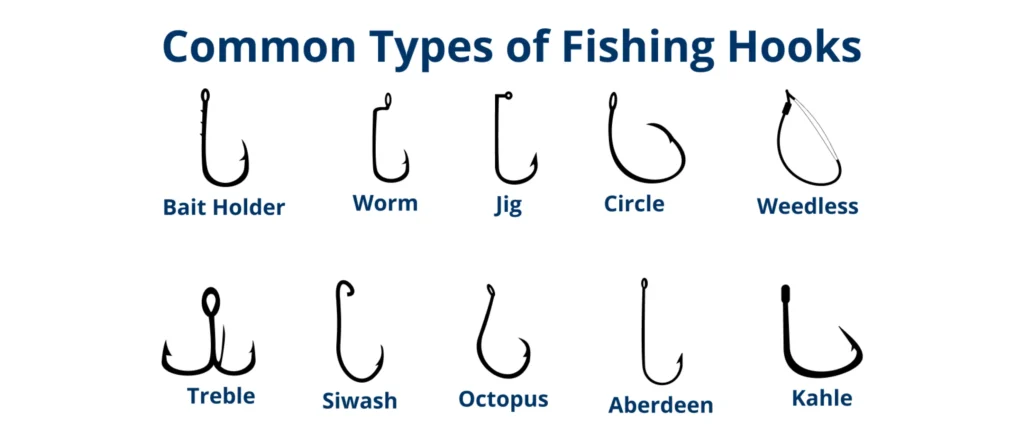
- Circle Hooks: Best for live bait and catch-and-release fishing. The point is curved inward, which usually causes it to hook the fish in the corner of the mouth rather than the gut.
- J-Hooks: A versatile, classic “all-around” hook used for many species like bass, walleye, and snapper.
- Aberdeen Hooks: Feature a long shank and light wire; these are ideal for panfish because they are less likely to damage live bait like minnows or crickets.
- Long Shank Hooks: Use these for toothy fish (like mackerel or barracuda) to prevent them from biting through your line.
- Mosquito Hooks: Excellent for finesse presentations like drop-shotting small plastics or nose-hooking small minnows.
4. Consider Hook Strength and Anatomy
- Wire Gauge: Use a heavier gauge (2X to 4X thickness) when targeting big, aggressive fish that put up a hard fight to prevent the hook from straightening out.
- Hook Gap: A wider gap increases the chance of the point catching the fish’s mouth rather than being swallowed.
- Hook Points: Different points are suited for different mouth types; for example, a knife-edge point is ideal for fish with tough, bony mouths, while a needle point is better for fish with softer mouths.
Quick Reference Selection Guide
| Target Fish | Recommended Hook Type | Typical Sizes |
|---|---|---|
| Panfish / Bluegill | Aberdeen Hook | #6 – #12 |
| Bass (Smallmouth) | Worm Hook | 2/0 – 3/0 |
| Bass (Largemouth) | Worm Hook | 3/0 – 5/0 |
| Catfish | Circle Hook | 5/0 – 8/0 |
| Trout | Single / Fly Hook | #8 – #14 |
| Tuna / Tarpon | Circle Hook | 3/0 – 10/0 |
Next Steps for You:
- 📚 [Fishing Tips] — Fishing Tips for beginners.
- 📚 [Master the Basics] — Step-by-step for beginners.
- 🎣 [Choose Best Gear] — Expert reviews & top picks.
- 🐟 [Back to Beginner Fishing Guide].
