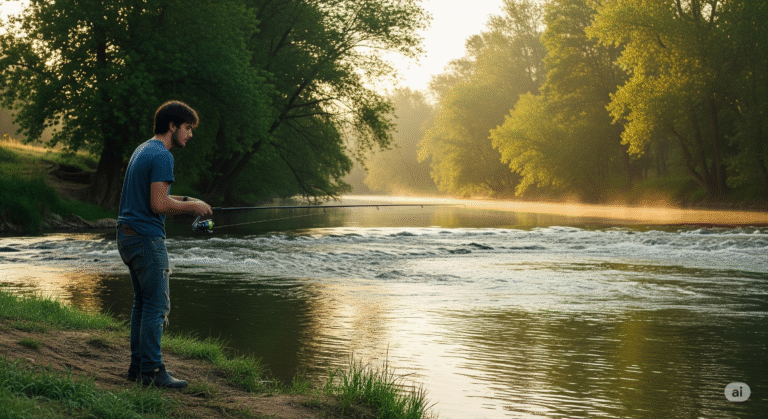
Fishing Tips:Where bass live and why?
Bass live in virtually all waters where their basic life requirements—food, security, and suitable spawning conditions—are available to them. Their specific locations are determined by a combination of species-specific preferences, water temperature, and the presence of underwater features known as structure and cover.
Where Different Bass Species Live
- Largemouth Bass: These are the most adaptable species, primarily inhabiting lakes, ponds, and quiet backwaters of river systems. They prefer slow or no current and are often found in relatively shallow water.
- Smallmouth Bass: Unlike largemouths, smallmouths thrive in cooler, clearer moving water, such as streams and rivers with medium-strength currents. In lakes, they prefer deep shorelines, rocky reefs, and sandy bottoms.
- Spotted Bass: This intermediate species prefers a “middle ground” environment; they like some current but not as much as smallmouths, and they often school in open, deep water to chase baitfish.
Why They Live There: The Biological Drivers
Bass behavior is governed by the need to manage energy efficiently, a principle often compared to an “underwater accountant”.
- Ambush and Security (Cover): Bass are ambush predators that rely on “cover”—objects like weed beds, lily pads, logs, stumps, and docks—to conceal themselves from prey and stay safe from larger predators. Largemouths, in particular, rarely chase food over long distances and prefer to lung from hiding spots.
- Navigation and Patterns (Structure): Most bass do not meander randomly; they orient to “structure,” which refers to changes in the bottom’s shape, such as sunken channels, ledges, reefs, and drop-offs. Structure acts as a “road map” for fish to travel and find resting spots.
- Water Temperature and Metabolism: Because bass are cold-blooded, their metabolism is controlled by water temperature. They are most active and feed aggressively in their “comfort zone,” typically between 65°F and 85°F.
- Dissolved Oxygen: Smallmouth bass are more sensitive to their environment and require the higher dissolved oxygen levels found in moving or cleaner water to thrive.
- Light Sensitivity: Bass have very sensitive eyes and generally avoid bright, direct sunlight. During the day, they will retreat to deep water or the darkest shadows of cover (the “shady side” of logs or docks) to remain effective hunters.
Seasonal and Environmental Shifts
- Spawning: In the spring, when water hits approximately 60°F, bass migrate from deep wintering holes to shallow, wind-sheltered bays with hard bottoms of sand or gravel to build nests.
- Weather Changes: Falling barometric pressure often triggers feeding binges. During rain or wind, bass may move into shallower water because surface disturbances create low-light conditions and wash new food sources into the water.
- Rising Water: When water levels rise and flood surrounding lowlands, bass often move into these freshly flooded areas to take advantage of new food sources like worms and crawfish.
← Back to: Bass Fishing for Beginners: Complete Start-Up Guide (2026)!
← Back to: Bass Fishing for Beginner Hub!