Navigating the Waters: A Beginner’s Guide to Spinning vs. Baitcasting Reels
For a newcomer standing on the shore of a lake or a pier, the world of fishing equipment can seem overwhelmingly technical. One of the first and most critical decisions you will face is choosing between a spinning reel and a baitcasting reel. Both serve the same ultimate purpose—bringing a fish to your hands—but they do so with vastly different mechanisms and learning curves. Drawing on technical data and user feedback from leading brands like Ugly Stik GX2, KastKing, PENN, PLUSINNO, and Sougayilang, this article analyzes the pros and cons of each from a beginner’s perspective.
Part I: The Spinning Reel – The Beginner’s Best Friend
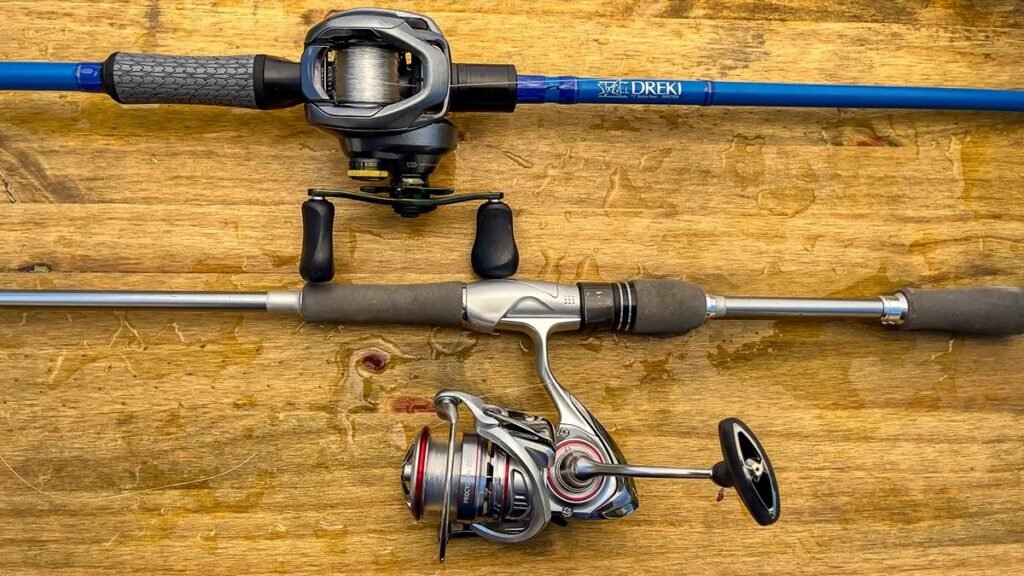
The spinning reel is the most common entry point for novice anglers, and for good reason. Its open-face design and fixed spool make it exceptionally user-friendly.
1. Ease of Use and “Hassle-Free” Operation
The primary advantage of a spinning reel is its simplicity. Unlike baitcasters, spinning reels do not require the angler to manually control the speed of the spool with their thumb during a cast. As one source notes, these reels are designed as a “hassle-free, ready-to-go solution,” allowing beginners to start fishing immediately without a steep learning curve. The bail system—a simple wire arm—is flipped open to cast and closed to retrieve, a motion that most beginners master in minutes.
2. Exceptional Smoothness and Casting Distance
Modern spinning reels, such as the PENN Pursuit IV or the KastKing Crixus, are engineered with advanced bearing systems (ranging from 4+1 to 12+1 shielded stainless steel bearings) to ensure a “butter smooth” retrieve. This smoothness is not just for comfort; it helps in casting lightweight lures—like those used for Trout or Panfish—much further than a baitcaster could. Users frequently describe the experience as “smooth as butter” or even like “driving a Cadillac”.
3. Versatility Across Species and Environments
Spinning reels are the “multi-tool” of the fishing world. They are equally at home in freshwater ponds targeting Bass as they are in saltwater environments for species like Redfish or Speckled Trout. Because they handle lighter lines (typically 4–12 lb test) with ease, they are ideal for a wide variety of target species including Walleye, Catfish, and Striper.
4. Portability and “Car-Ready” Design
For many beginners, the ability to travel with gear is vital. Many spinning reels come paired with telescopic (collapsible) rods. These rods can shrink to roughly 16.5 inches, fitting easily into a car trunk, a backpack, or even a glove box. This makes them a “no-brainer purchase” for those who want to be ready for spontaneous fishing trips.
Part II: The Baitcasting Reel – The Precision Powerhouse
If the spinning reel is a reliable sedan, the baitcasting reel is a manual sports car. It offers more power and precision but requires significant skill to operate.
1. Precision and Accuracy
The hallmark of a baitcaster is control. Because the spool rotates as you cast, an experienced angler can use their thumb to “feather” the line, stopping the lure exactly where they want it. Users have described this ability as “unbelievably far and accurate” compared to spinning setups. This is crucial when you need to drop a lure into a tiny opening in heavy weeds or under a low-hanging branch.
2. Torque and Power for Big Fish
Baitcasters are designed for heavy-duty work. They provide more torque, which is essential when battling larger, aggressive fish like Catfish or heavy Bass in thick cover. Reels like the KastKing Crixus baitcaster are often described as “gladiator-like” due to their powerful carbon drag systems and high-strength gear ratios.
3. Handling Heavy Lines and Rigs
While spinning reels excel with light gear, baitcasters thrive with “chunkier rigs, jigs, and crankbaits”. They handle heavy monofilament and braided lines (15–30 lb test or higher) without the line-twist issues that can plague spinning reels.
Part III: The Beginner’s Dilemma – The Disadvantages
Every piece of gear has its trade-offs, and for a beginner, these “cons” can be deal-breakers.
The Baitcaster’s “Birds Nest” (Backlash)
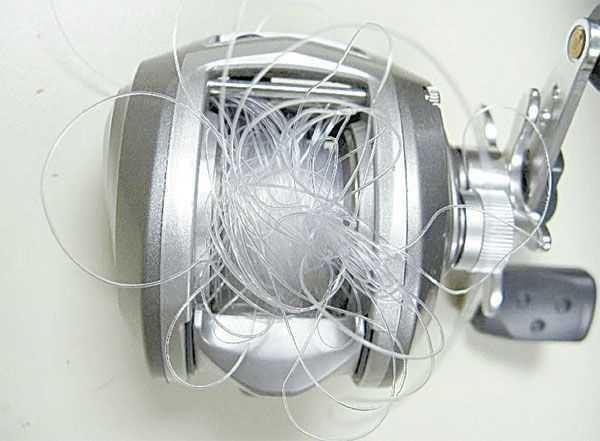
The biggest deterrent for a beginner is the backlash, colloquially known as a “birds nest”. This occurs when the spool spins faster than the line is exiting the reel, resulting in a massive, tangled mess of line. While modern baitcasters include magnetic or centrifugal brake systems to help, beginners often find themselves spending more time untangling line than fishing.
Spinning Reel Line Management
Spinning reels are not immune to issues. If the spool is overfilled, the line can slip behind the reel housing into the gears, creating a “mess”. Additionally, while spinning reels are great for distance, they generally lack the pinpoint accuracy of a baitcaster.
Durability and Quality Concerns
For both types, “budget” combos often receive mixed reviews regarding durability. While many find them a “great value for the money”, others report components like reel handles or rod tips being “flimsy” or breaking under minimal stress.
Part IV: Material Science – What are you paying for?
Whether you choose spinning or baitcasting, the materials of the combo significantly affect performance.
- Rods: Most high-quality beginner combos use IM6 Graphite or carbon fiber composites. Graphite provides the sensitivity to “feel what’s going on” and detect small bites, while fiberglass adds the strength to land larger fish.
- Guides: Look for stainless steel frames with ceramic or Zirconium Oxide inserts. These inserts reduce friction, allowing for longer casts and preventing the line from fraying under heat.
- Handles: Comfort is key for all-day fishing. Most modern rods feature EVA foam or Superpolymer handles, which are designed to be slip-resistant even when wet.
Part V: The “Full Kit” vs. Individual Components
Many brands offer “Full Kits” that include the rod, reel, line, lures, and a carrying case.
- Pros: These are “ideal for beginners” because they provide everything needed to start fishing immediately without needing to research individual hooks or lures.
- Cons: Sources warn that the included line and lures are often “basic” or “low quality”. For instance, one user noted that the 3lb test line included in some kits was too light for the lures provided and recommended upgrading to 6-10lb line for a better experience.
Summary Table for Beginners
| Feature | Spinning Reel | Baitcasting Reel |
|---|---|---|
| Best For | Light lures, beginners, travel | Heavy lures, precision, power |
| Learning Curve | Very Low; easy to master | High; requires practice to avoid tangles |
| Backlash Risk | Minimal | High (“Birds Nesting”) |
| Species | Trout, Panfish, Bass, Walleye | Large Bass, Catfish, Striper |
| Main Material | IM6 Graphite / Carbon Fiber | IM6 Graphite / Aluminum |
Final Recommendation
If you are a complete beginner who wants to enjoy a stress-free day on the water, start with a spinning reel combo. Brands like Ugly Stik GX2, PLUSINNO and Sougayilang offer excellent telescopic options for those who value portability, while the PENN Pursuit IV provides a more traditional, heavy-duty saltwater-capable setup.
Only move to a baitcaster once you have mastered the basics of casting and are looking for the specialized precision needed for technical bass fishing or the brute strength required for massive catfish. Whichever you choose, remember that the “best” reel is the one that gets you outside and onto the water.
Click here to start your bass fishing journey.